AMERICAN DREAMERS *From nothing to neon — immigrant entrepreneurs who built Vegas
Every neon sign began as someone's impossible dream.
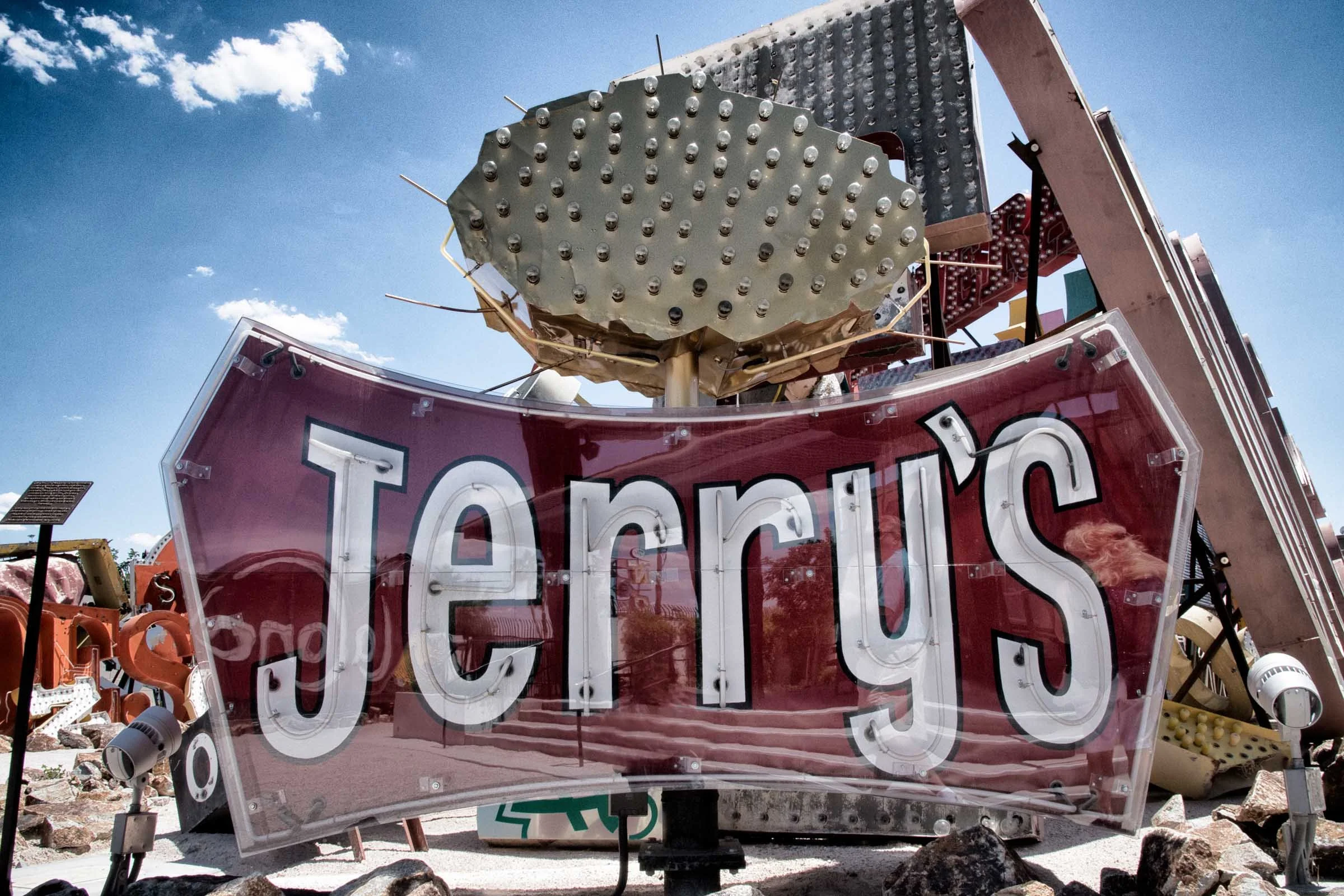
Greek immigrants Angelo and Jerry Stamis opened their casino in 1964 — their family still runs it 60 years later, the only locals' casino in North Las Vegas. Milton Prell, a Jewish entrepreneur from St. Louis, built the Sahara in 1952 and called it "The Jewel in the Desert" — the Beatles stayed here, the Rat Pack performed here. The Golden Nugget has stood on Fremont Street since 1946, witnessing 80 years of American ambition, from downtown glory to Steve Wynn's renaissance.
Before corporate consolidation erased their names, these entrepreneurs wrote Vegas history in neon. Their signs weren't advertisements — they were declarations of arrival.
This is the immigrant story America built, then forgot.


Why This Matters for Institutions
This collection positions within several curatorial frameworks:
-
Behind Vegas's neon facades: Greek families, Jewish entrepreneurs, working-class dreamers who built an industry before corporations absorbed it. These signs document American economic mobility — the promise that anyone could arrive with nothing and build an empire.
-
Angelo and Jerry Stamis opened Jerry's Nugget in 1964. Six decades later, it remains the only family-owned locals' casino in North Las Vegas — a monument to persistence in an industry dominated by consolidation.
-
Milton Prell's Sahara hosted the Beatles (1964), the Rat Pack, and the Jerry Lewis MDA Telethon for 21 years. The Congo Room was Vegas entertainment's epicenter. This sign carries 59 years of American popular culture.
-
Opened in 1946, the Golden Nugget is the oldest continuously operating casino in Las Vegas. It witnessed Fremont Street's golden era, decline, and Steve Wynn-led renaissance — 80 years of downtown transformation encoded in a single sign.
-
Getty Museum: Western American Dream narrative, California-Nevada cultural connection
Nevada Museum of Art: Regional history, gaming industry evolution
SFMOMA: Vernacular documentation tradition (Walker Evans, Ed Ruscha)